
Bronze Owl Sculpture


Bronze Owl Sculpture - Signed, Numbered Edition of 9
Unafraid of the Dark
Approx. Size 32cm tall x 37cm depth
Once all 9 of the edition have been cast plus one Artist's Copy, the mould will be destroyed and that will be the end of the edition. There will be no more brought into the world.
Free UK Delivery
Free UK Delivery
Tracked 24 Delivery
International Shipping
International Shipping
Flat rate £30 ● Tracked International ●
Delivery times vary by destination
Questions?
Questions?
I know that buying art online is a matter of trust, so I'm here to answer any questions you might have. These are my contact details
- Foundry Cast
- Recyclable Packaging
- Certificate of Authenticiy
- Tracked Delivery




Owls are such a recognisable shape, they're so often featured in childrens' books that there's no wonder we all know and love them.
I remember having the book "The Owl Who Was Afraid of the Dark," and resonating with the main character "Plop" as I too had a fear of the dark.

This Owl is sculpted from a surprise encounter with a Tawny Owl
It was dark and I thought I heard something outside in the garden. So off I went with my torch.
When I spotted a surprised looking Tawny Owl in the tree looking back at me, I don't know who had the greatest shock!
Of course, they didn't stay, but by sculpting them I get to keep that memory, and share it with my fellow Owl lovers.

To get the best quality casting, I work with with an artist-led foundry near Liverpool.
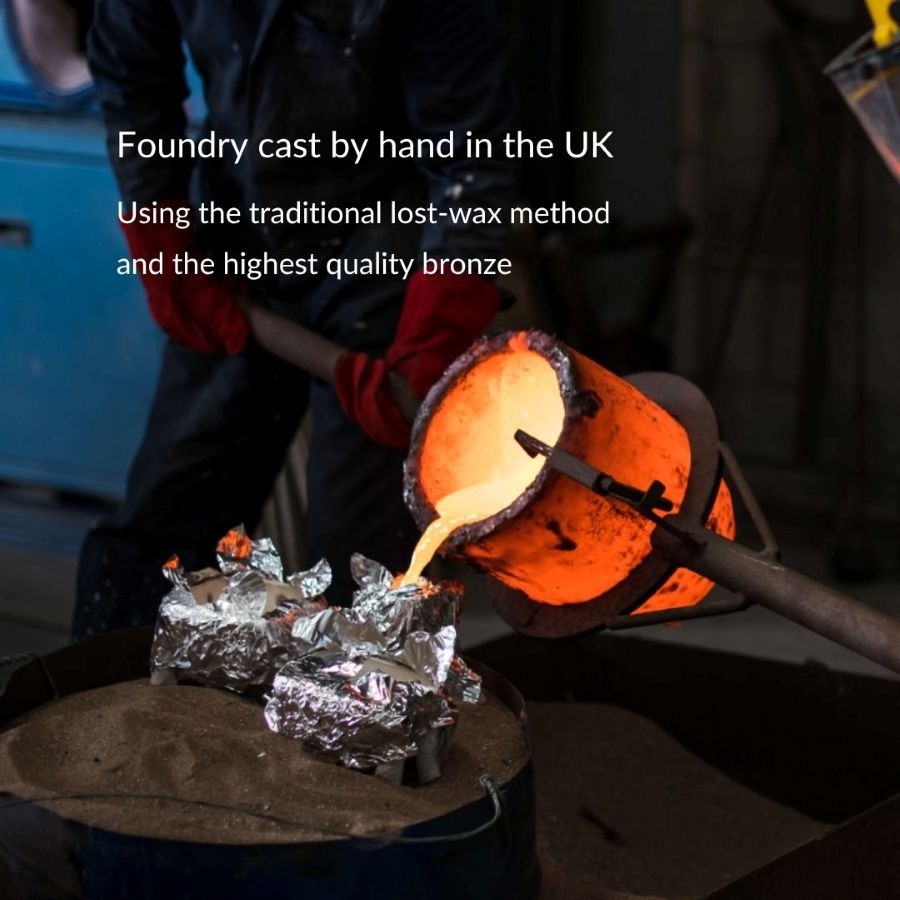
They're cast in the traditional "lost-wax" way using the best quality silicone bronze.
It's a lengthy, highly-skilled, multi-step process.

What is bronze?
Bronze is a metal alloy mostly made up of copper.
Mass-produced bronzes often skimp on the copper content and use tin, lead, and iron instead which leave the sculptures open to corrosion and breakages.
The bronze used for my sculptures contain a high copper content of 96%, along with 1% manganese and 3% silicon. The added silicon strengthens the sculptures, although it makes the process more challenging and costly for the foundry.
What's the difference between hot and cold cast bronze?
Hot or cold?
Cold cast bronze refers to sculptures made with resin and moulds, sometimes finished with bronze powder to mimic the look of a genuine bronze sculpture.
Hot cast Bronze involves creating a mold from the original sculpture, followed by the creation of a wax copy. The wax piece is then dipped multiple times in a ceramic coating, creating a sturdy shell. This is then heated in a kiln to melt the wax. Molten bronze can then be poured into the ceramic shell.
Once cooled, the ceramic shell is removed, and the sculpture is assembled and perfected. The finishing touches involve patination to create beautiful surfaces, followed by a seal of hot wax that gives the sculpture its sheen and protects the surface from the elements.
Provenance
Can you trace the sculpture’s journey from the artist to your hands?
Look for sculptures made in the UK by reputable foundries, as they proudly put their name to their work. And for your peace of mind and future valuation, you’ll receive a signed certificate of authentication alongside your bronze sculpture.
Limited editions.
The number of pieces in an edition directly impacts their exclusivity and value.
Higher edition numbers indicate less exclusivity, while lower numbers make each piece more sought after.
How do I look after my bronze?
I personally recommend enjoying my bronze sculptures indoors to keep them looking their best. A wipe over with a clean, soft, dry cloth is all that’s needed.
Due to the organic nature of bronze, it will, over time darken. In areas where it is rubbed by hands it may eventually show the original bronze through any patina. This becomes part of the piece's story.


If you love Owls, there's more to see...


